
Exhibit Placard Framework
McMillan Walking Museum Interpretive History Experience
Client:
District of Columbia
Venue/Location:
Reservoir Park and Recreation Center
Browse:
Exhibits & Interactives
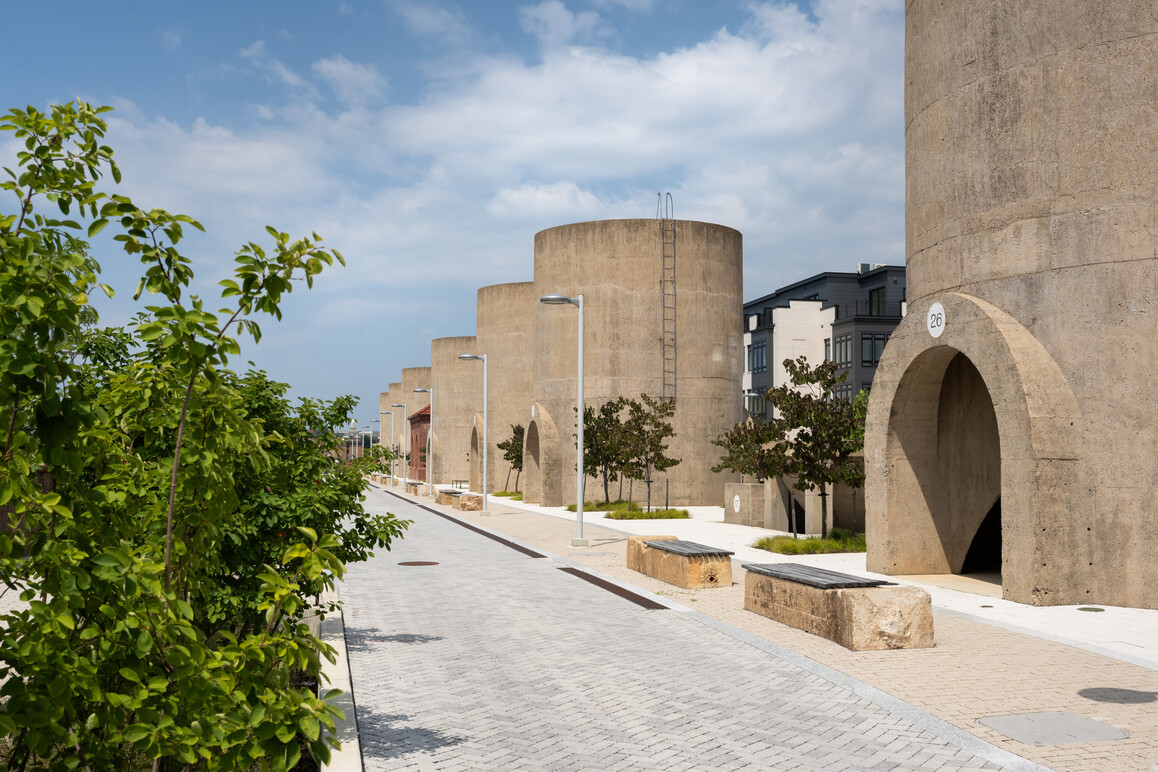
Sand bins stand at attention in this view, looking west across the site. Photo by Vivian Marie Doering.
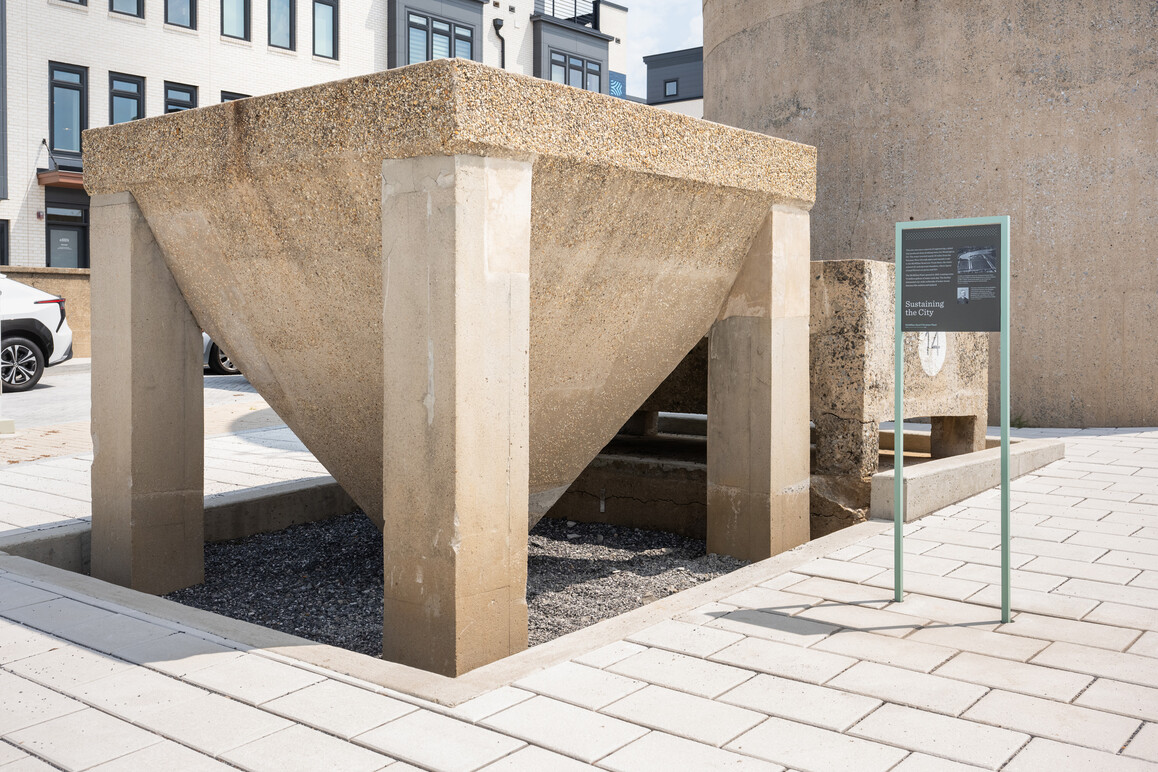
The outdoor sand washers were only used for a few years. By 1944, workers operated sand-washing machines inside filter beds. Photo by Vivian Marie Doering.
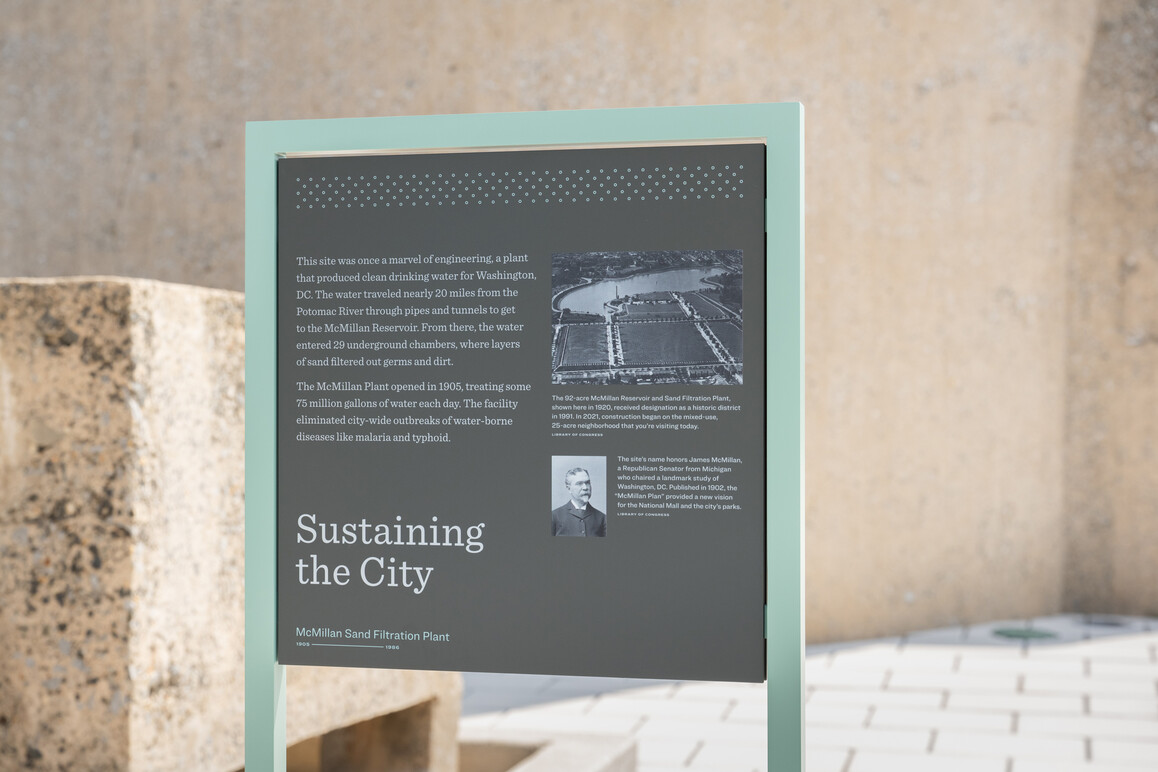
The McMillan Plant opened in 1905, treating some 75 million gallons of water each day. The facility eliminated city-wide outbreaks of water-borne diseases like malaria and typhoid. Photo by Vivian Marie Doering.
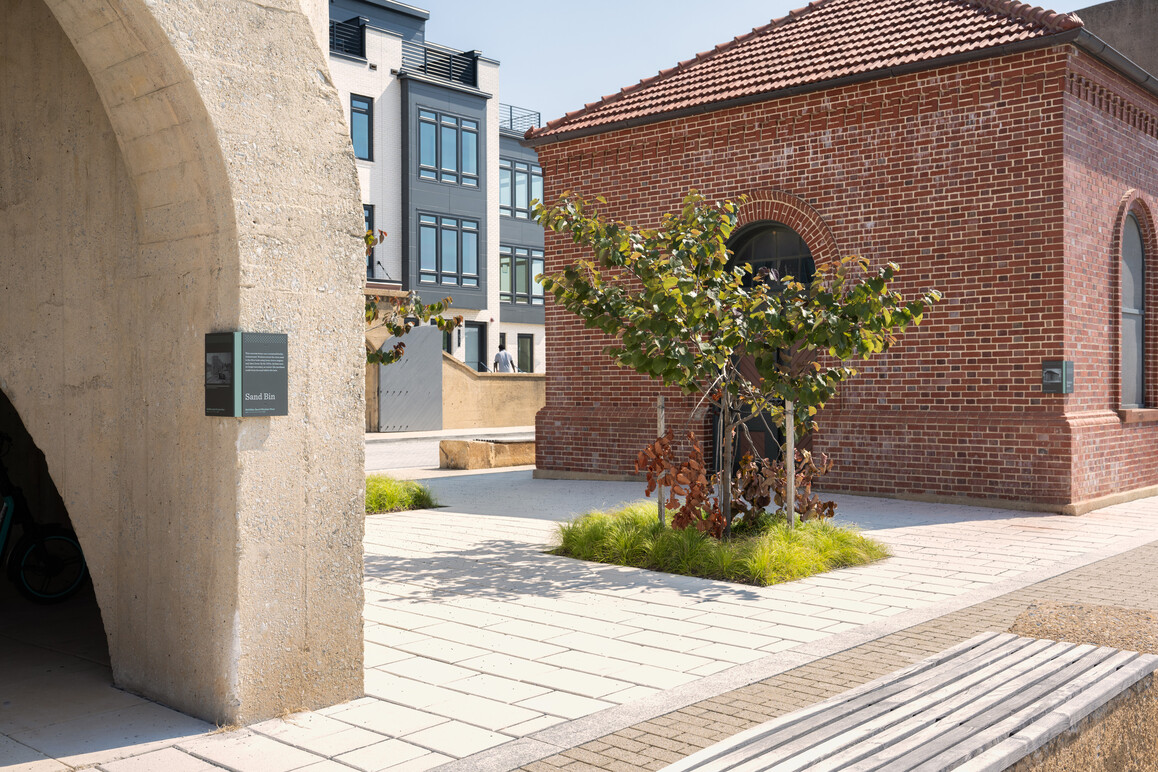
View of sand bin (left) and regulator house (right). Photo by Vivian Marie Doering.
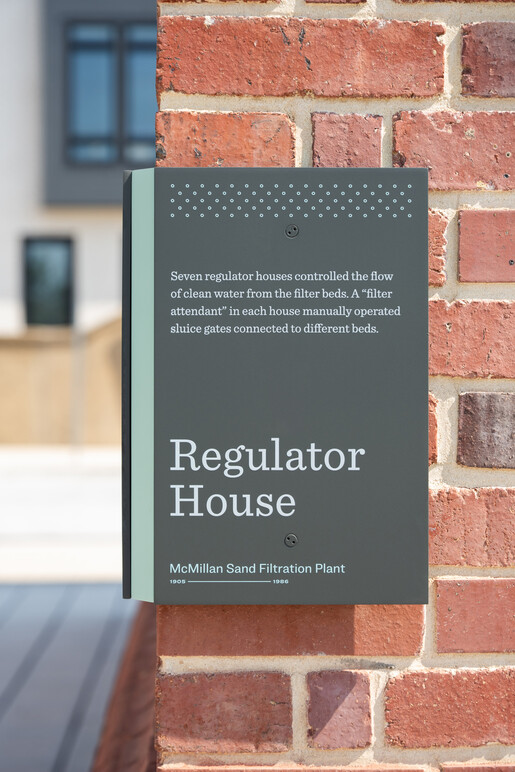
Seven regulator houses controlled the flow of clean water, with manually operated sluice gates connected to different beds.
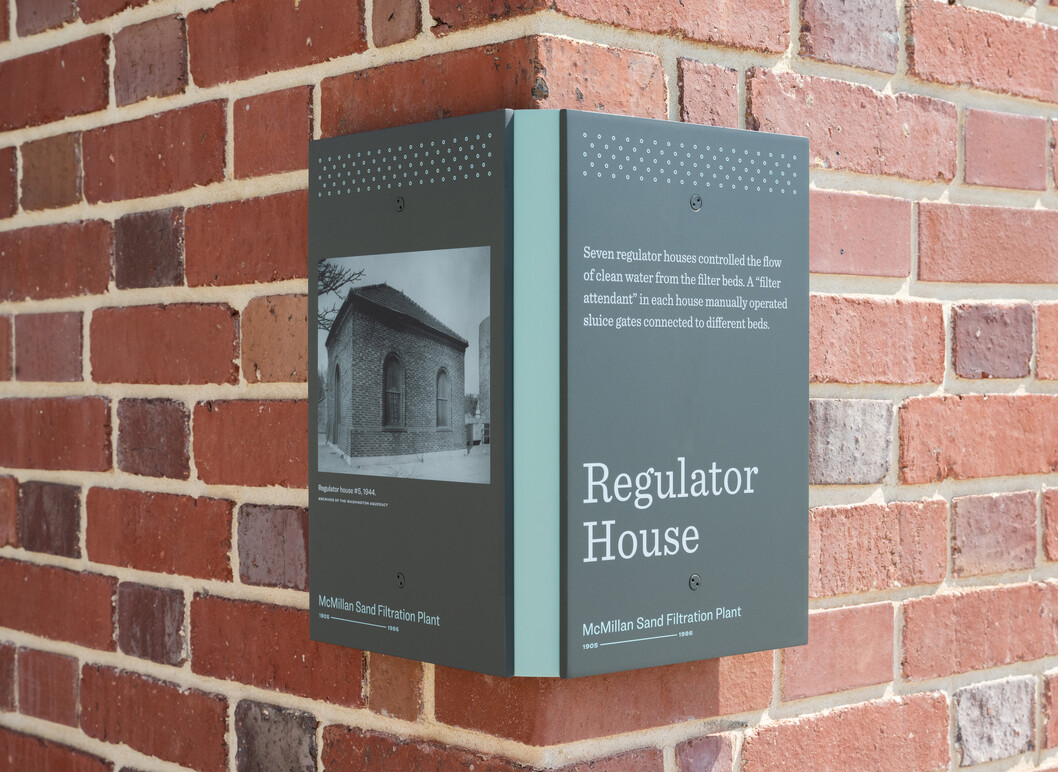
Interpretive signage was designed to capture the attention of park visitors while still serving a secondary role to the historic structures they described. Photo by Vivian Marie Doering.
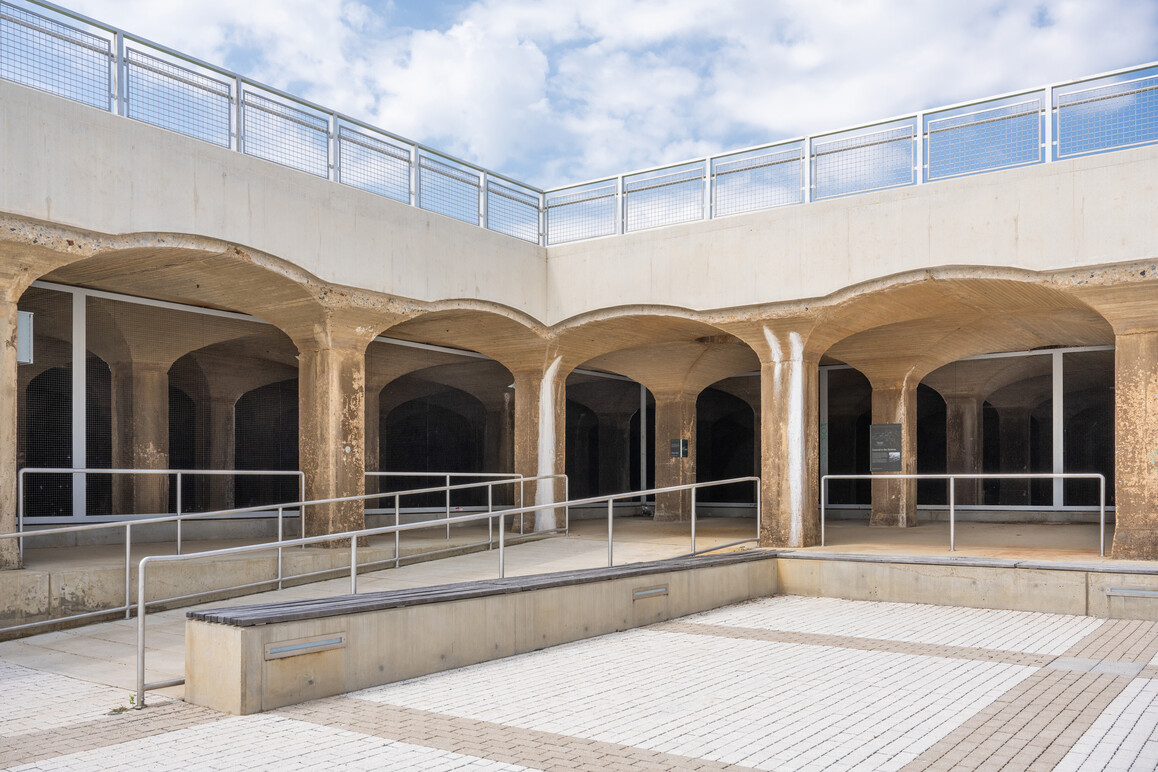
As part of the redevelopment, a section of filter beds was preserved in order to better explain the original use of the site. Photo by Vivian Marie Doering.
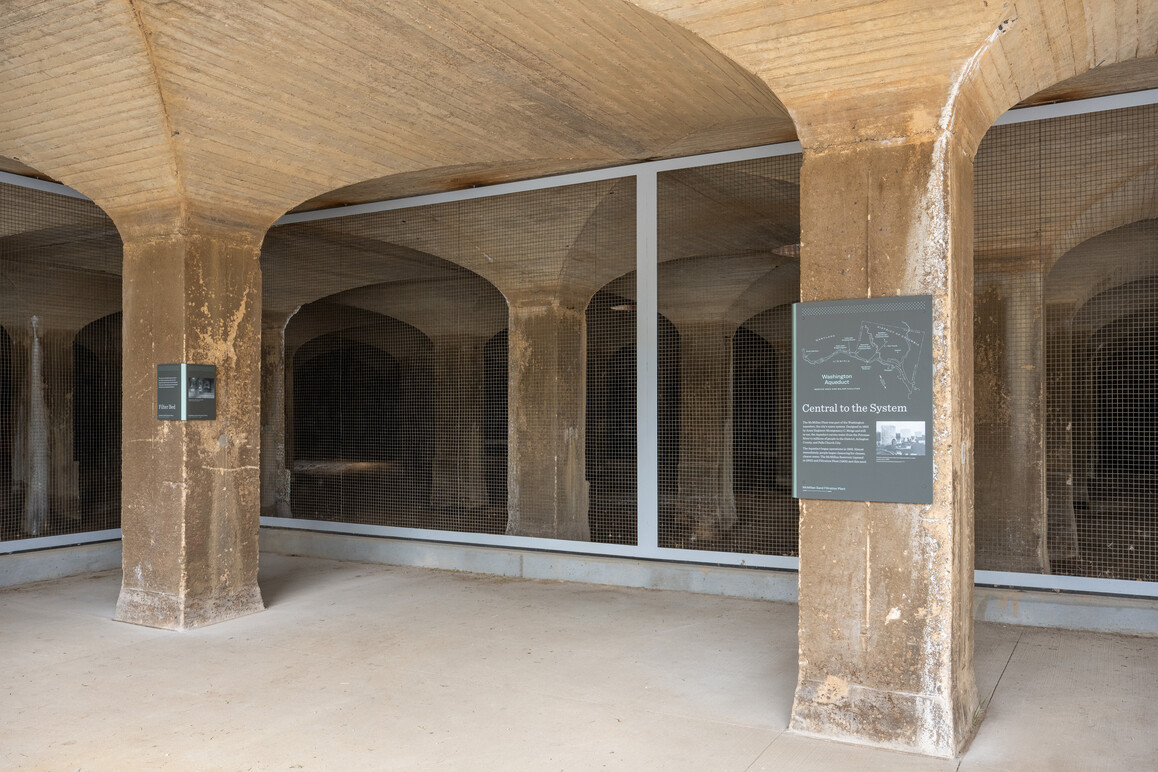
The site once included 29 concrete filter beds. Water entered from the top, then seeped through 50 inches of sand and gravel. Clean water collected in an iron drain below the filter bed, ready for distribution. Photo by Vivian Marie Doering.
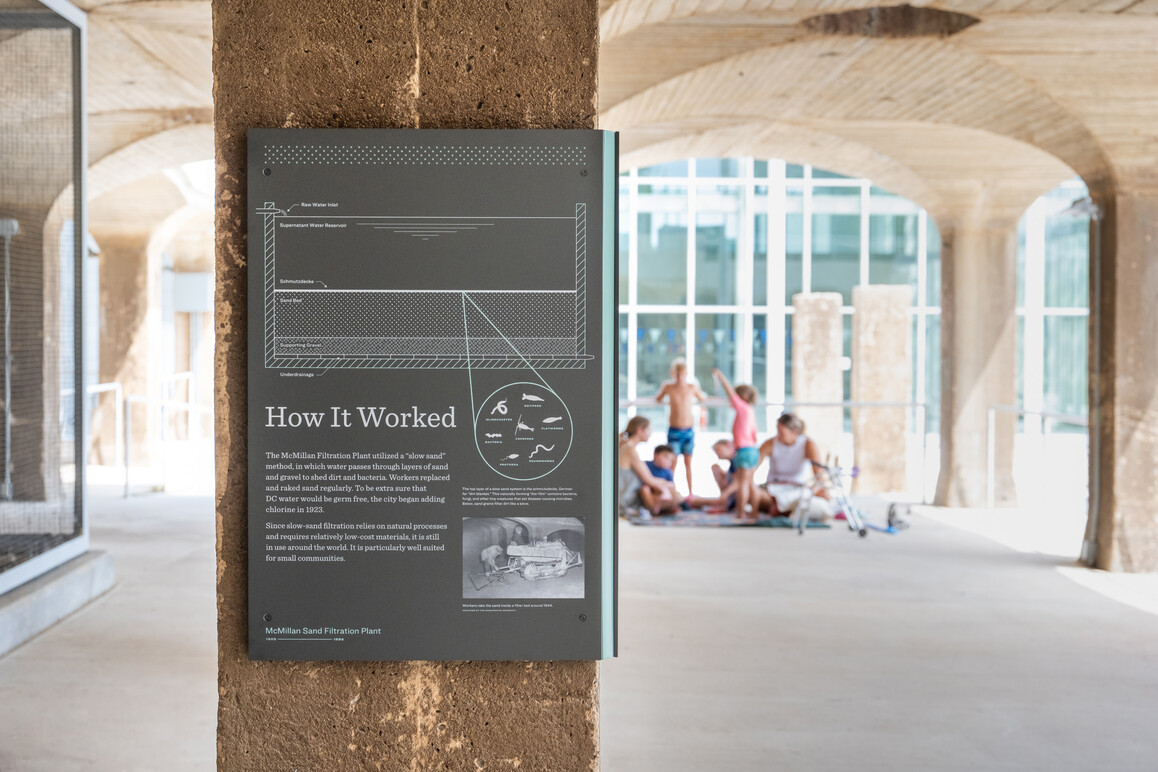
The McMillan Filtration Plant utilized a “slow sand” method, where water passes through layers of sand and gravel to shed dirt and bacteria. Workers replaced and raked sand regularly. Photo by Vivian Marie Doering.
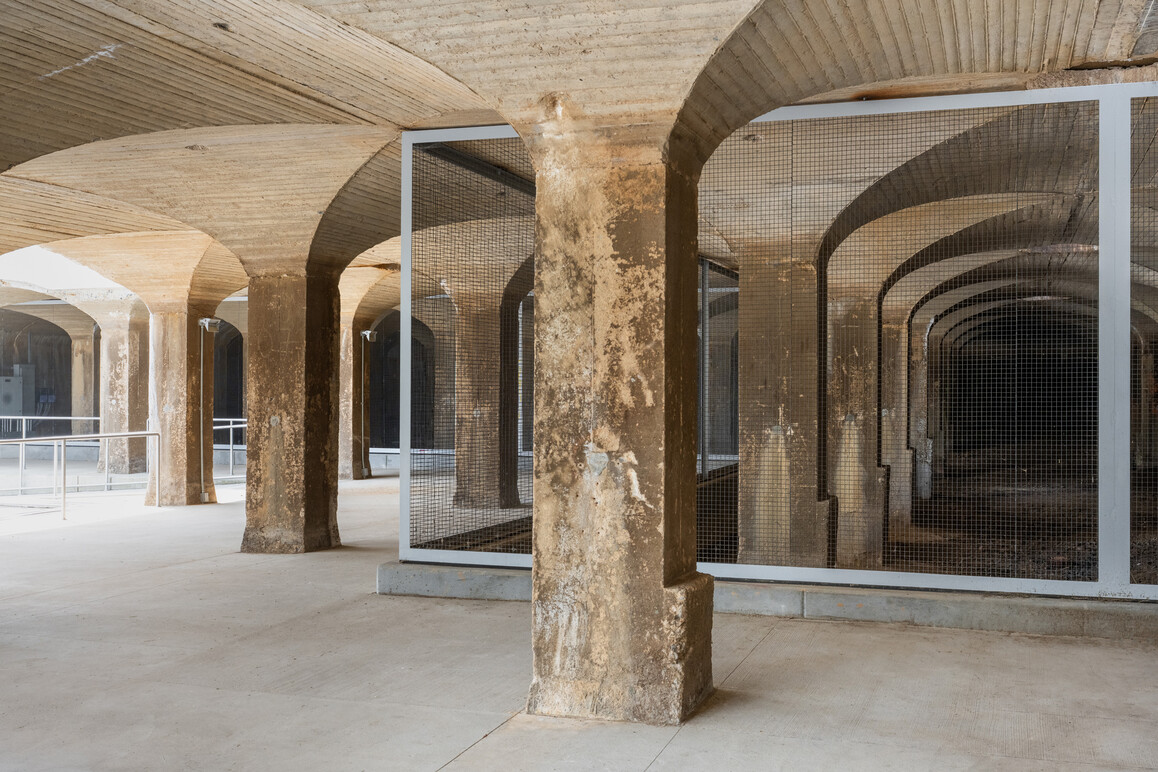
View into the filter beds that were preserved as a key part of the redevelopment efforts. Photo by Vivian Marie Doering.
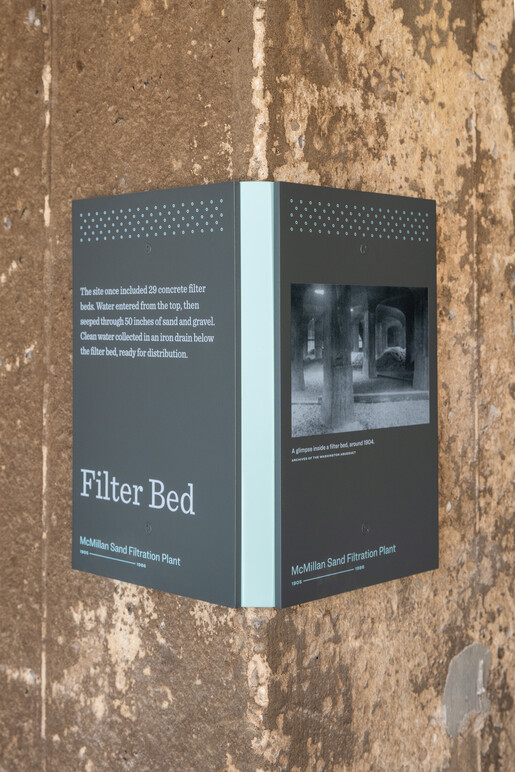
Detail view of the two-sided interpretive panel that describes the filter beds. Photo by Vivian Marie Doering.
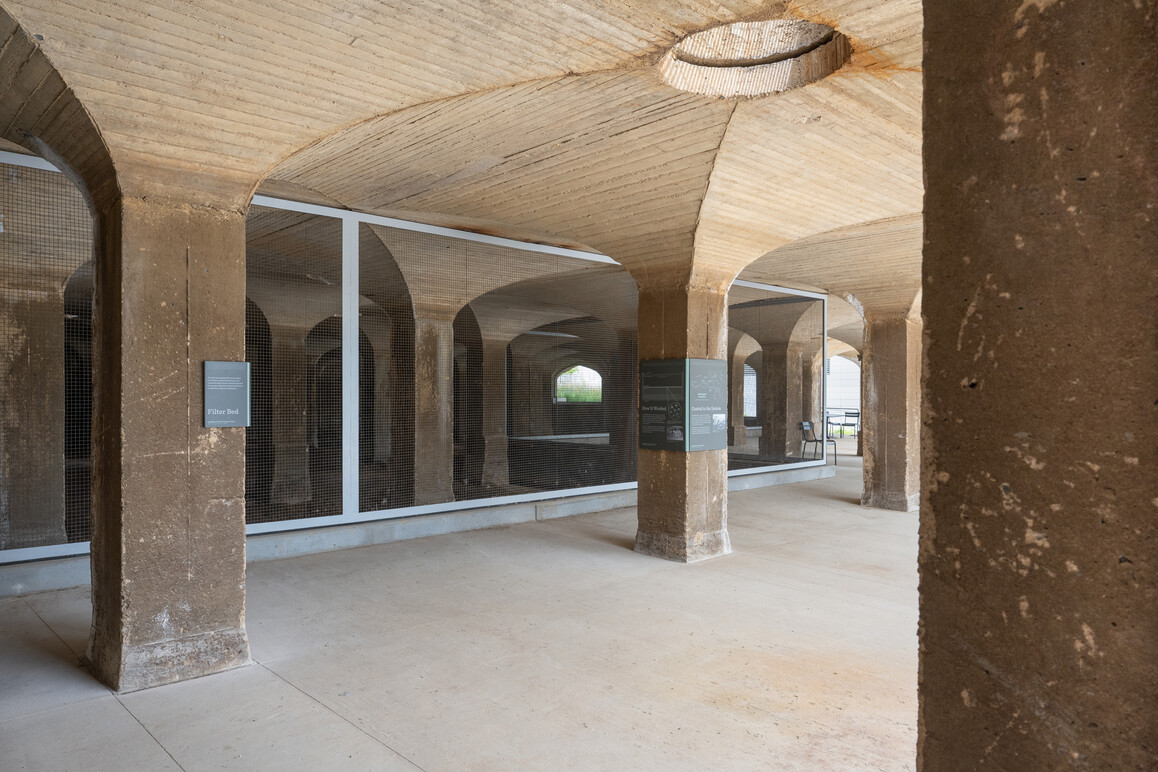
The McMillan Plant was part of the Washington Aqueduct. Designed in 1853 by Army Engineer Montgomery C. Meigs and still in use, the Aqueduct carries water from the Potomac River to millions of people in the District, Arlington County, and Falls Church City. Photo by Vivian Marie Doering.
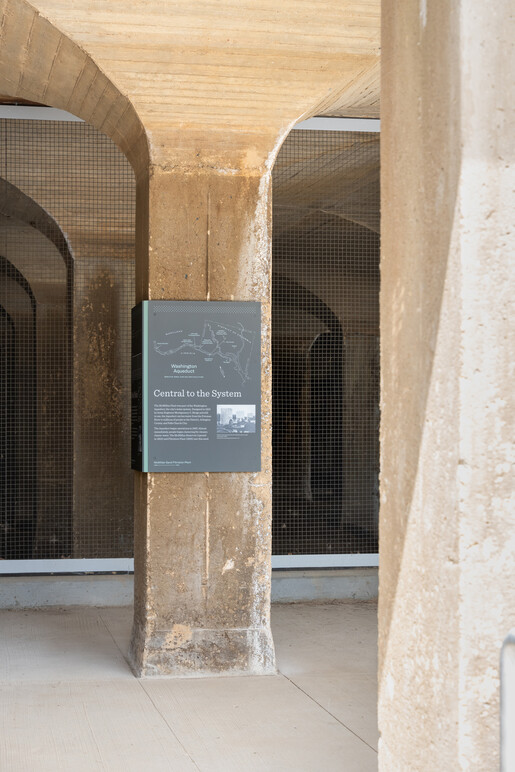
"Central to the System" interpretive panel in the filter bed area. Photo by Vivian Marie Doering.
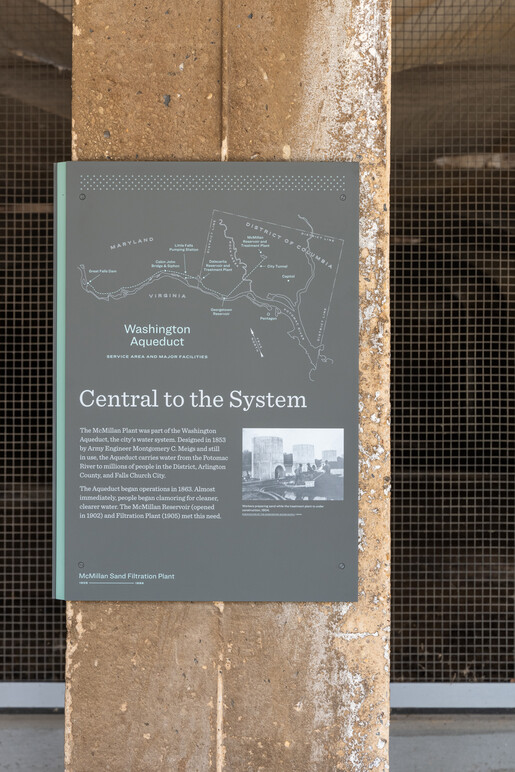
Detail view of "Central to the System". Photo by Vivian Marie Doering.
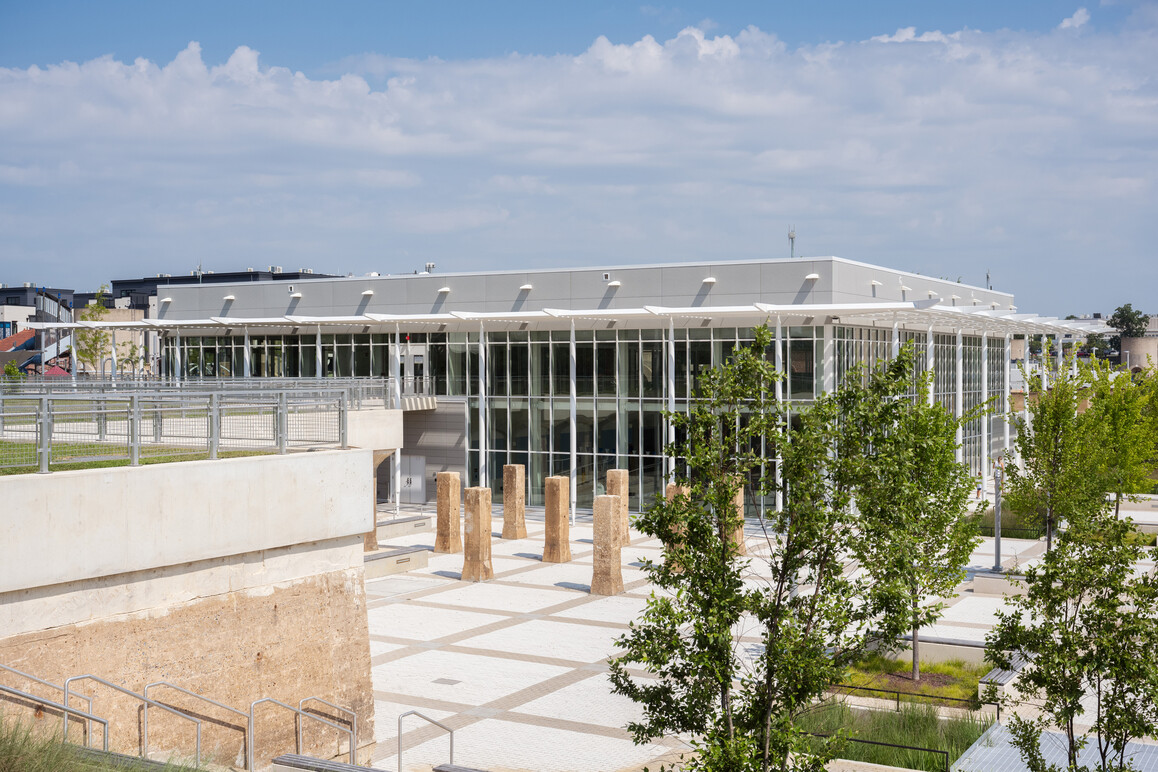
View down into the former filter beds area—now adapted for public park use. Photo by Vivian Marie Doering.
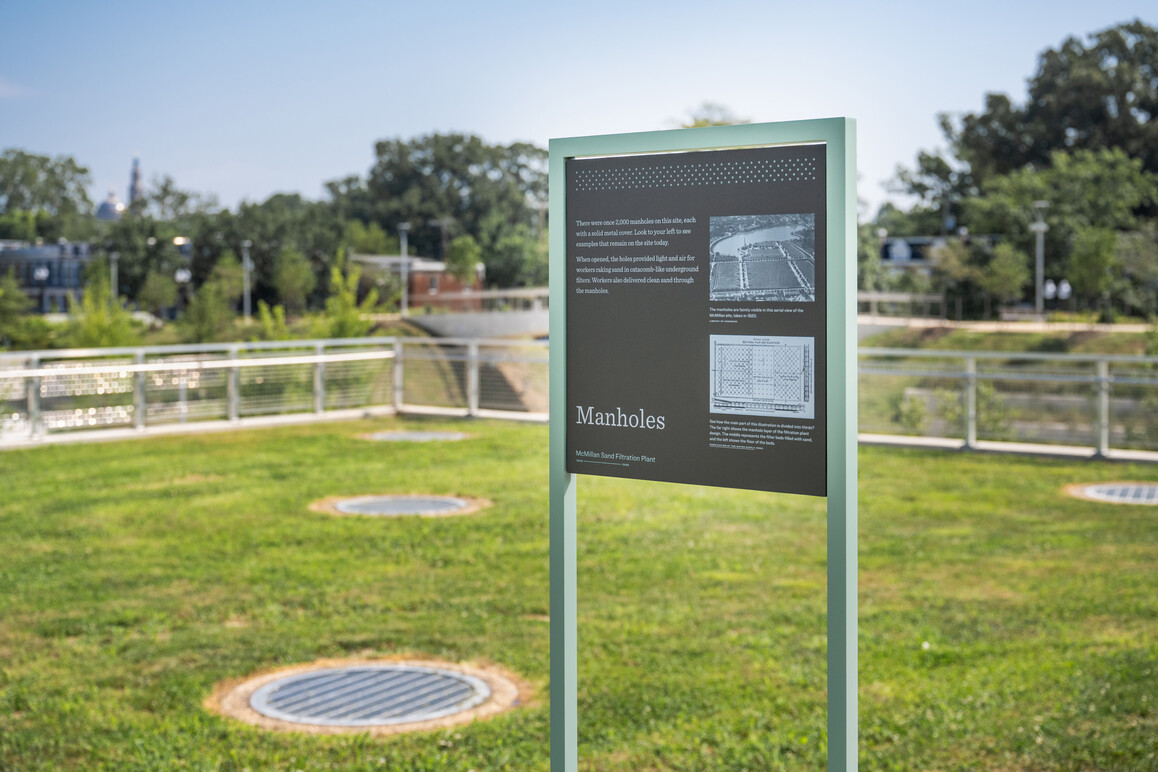
There were once 2,000 manholes on this site, each with a solid metal cover. When opened, the holes provided light and air for workers raking sand in catacomb-like underground filters. Workers also delivered clean sand through the manholes. Photo by Vivian Marie Doering.
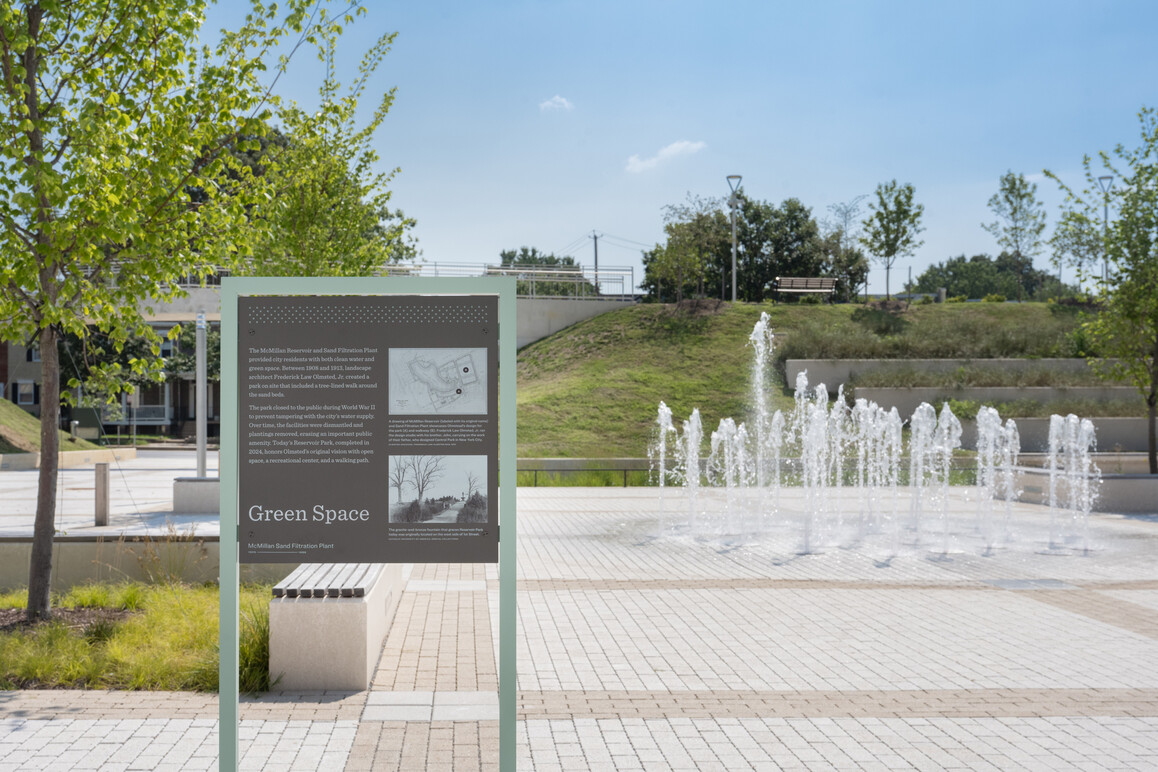
Between 1908 and 1913, landscape architect Frederick Law Olmsted, Jr. created a park on site that included a tree-lined walk around the sand beds. Photo by Vivian Marie Doering.
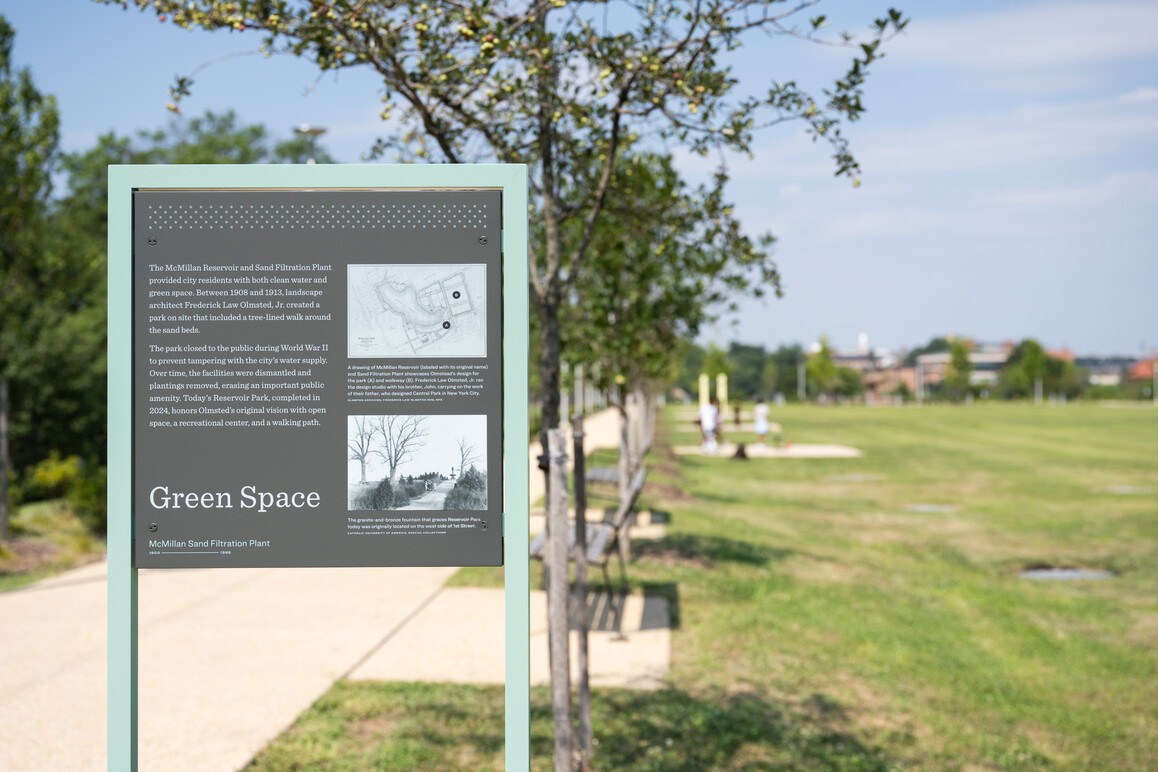
Today’s Reservoir Park honors Olmsted’s original vision with open space, a recreational center, and a walking path. Photo by Vivian Marie Doering.
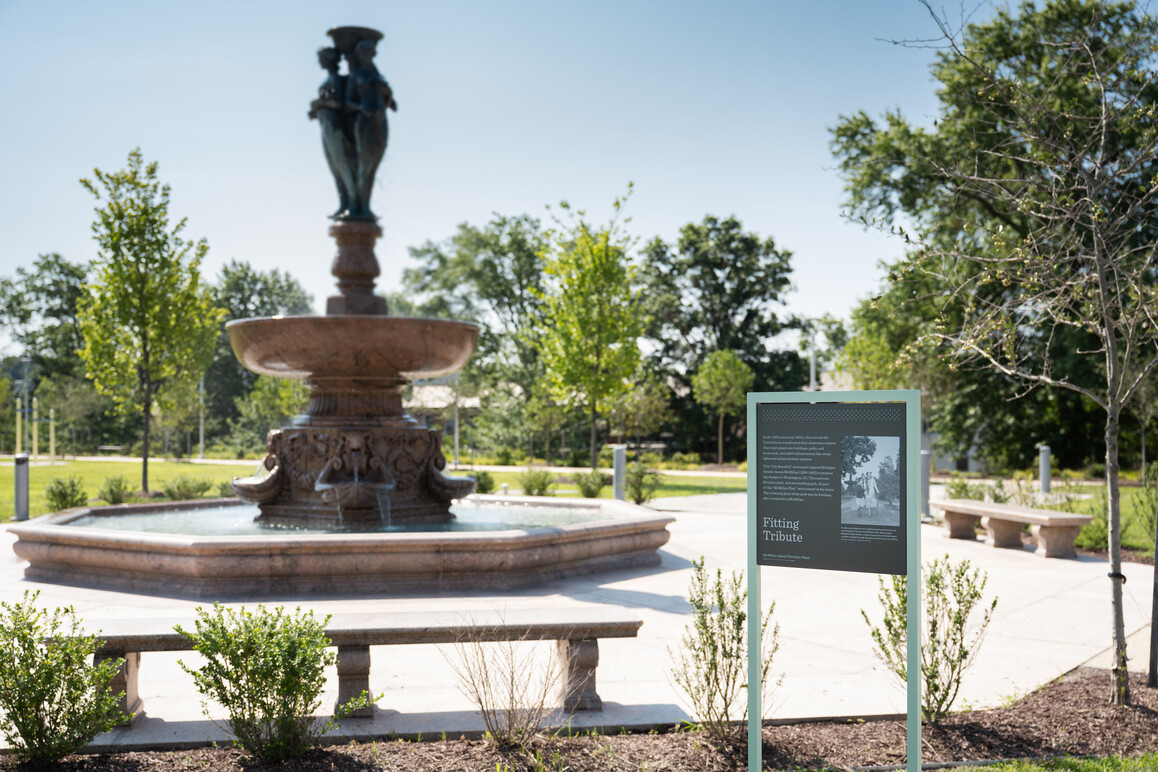
The granite-and-bronze fountain that graces Reservoir Park today was originally located on the west side of 1st Street. Photo by Vivian Marie Doering.
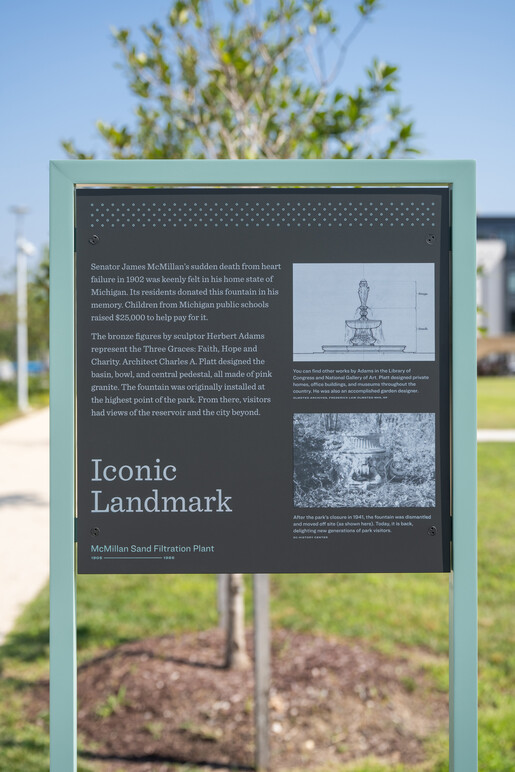
The bronze figures by sculptor Herbert Adams represent the Three Graces: Faith, Hope, and Charity.
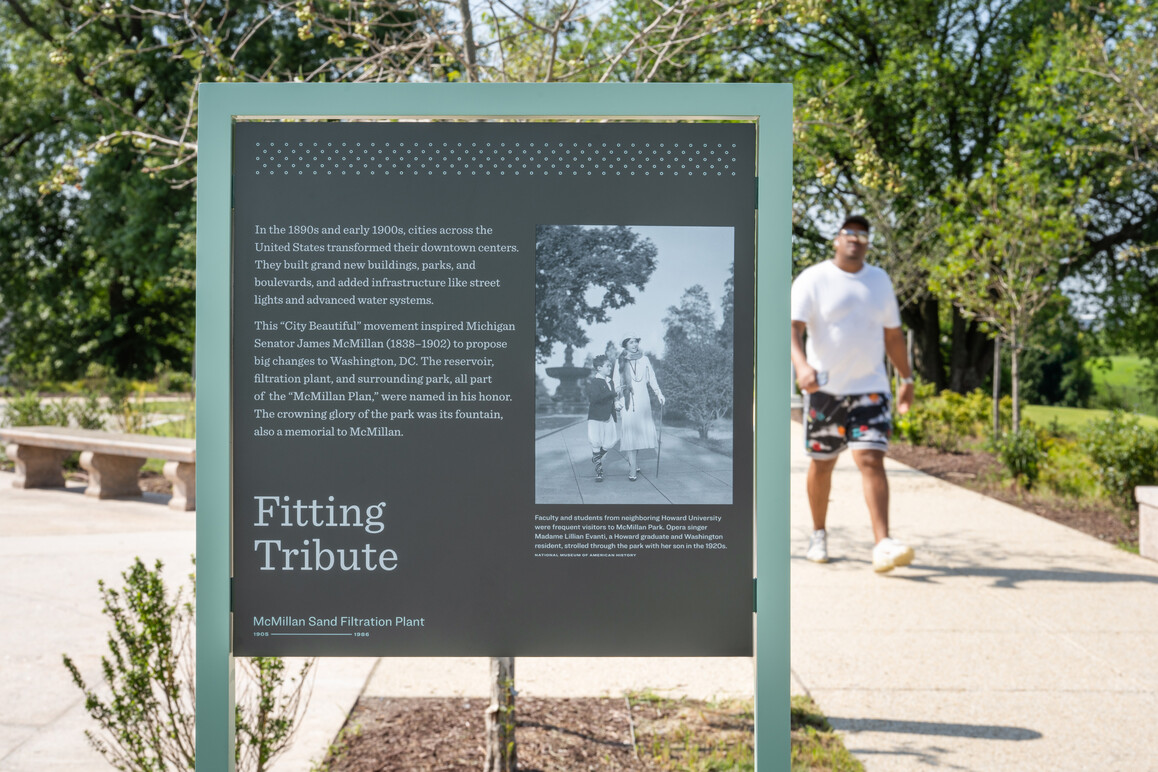
Faculty and students from neighboring Howard University were frequent visitors to McMillan Park. This particular placard shows opera singer Madame Lillian Evanti, a Howard graduate and Washington resident, strolling through the park with her son in the 1920s.
Client:
District of Columbia
Browse:
Exhibits & Interactives
McMillan Park (now also known as Reservoir Park and Recreation Center) was originally a sand filtration facility that opened for operations in 1905. It has since been redeveloped as a mixed-use community space for the surrounding neighborhoods. To properly recognize its historical significance to Washington, D.C., the District of Columbia tasked Belle & Wissell with creating an overarching interpretive experience. This included physical signage throughout the grounds and affixed to historical structures to fully interpret the campus’s history.
The entire site—a 25-acre expanse, featuring sand silos, regulator houses, and underground filter beds—was constructed as a critical component of the historic redesign of the D.C. water system. The process used slow sand filtration, which utilized no chemical treatments and was instrumental in significantly reducing the incidence of typhoid and other communicable diseases in the city. The site also incorporated a public park, with landscape architecture designed by Frederick Law Olmsted, Jr., to provide nearby residents with a valuable green space and escape from city life.
From concept through execution, Belle & Wissell collaborated closely with historians, architects, and the District in developing a multi-phase interpretive strategy. The history placards were realized in a variety of form factors to draw visitors’ attention to important areas of the site. Visitors can learn about the science behind slow sand filtration and explore the past and present communities of McMillan—all while standing alongside and within historic structures.
Project Accolades:
The Washington Post “After decades of hurdles, historic sand filtration site now a DC park,” 2024
Axios DC “New park and pool open at DC’s former McMillan Sand Filtration Site,” 2024
WJLA ABC Channel 7 News “New $137 million Reservoir Park Recreation Center opens in Northwest DC,” 2024
University of Maryland School of Architecture, Planning & Preservation “An Abandoned D.C. Water Site Regains its Utility,” 2025
Belle & Wissell Team Credits
Design Director: Gabe Kean
Lead Designer: Thomas Ryun
Content Developer: Sarah Morris
Additional Project Credits
Site Master Planning & Design: Perkins Eastman DC
Landscape Architecture: Nelson Byrd Woltz Landscape Architects
Preservation Architect: Quinn Evans Architects
Architect of Record: Quinn Evans Architects
General Contractor: Gilbane Building Company
Sign Fabricator: Honorcraft
Historic Preservation Consultants: EHT Traceries
Photographer: Vivian Marie Doering
Belle & Wissell Team Credits
Design Director: Gabe Kean
Lead Designer: Thomas Ryun
Content Developer: Sarah Morris
Additional Project Credits
Site Master Planning & Design: Perkins Eastman DC
Landscape Architecture: Nelson Byrd Woltz Landscape Architects
Preservation Architect: Quinn Evans Architects
Architect of Record: Quinn Evans Architects
General Contractor: Gilbane Building Company
Sign Fabricator: Honorcraft
Historic Preservation Consultants: EHT Traceries
Photographer: Vivian Marie Doering
McMillan Park (now also known as Reservoir Park and Recreation Center) was originally a sand filtration facility that opened for operations in 1905. It has since been redeveloped as a mixed-use community space for the surrounding neighborhoods. To properly recognize its historical significance to Washington, D.C., the District of Columbia tasked Belle & Wissell with creating an overarching interpretive experience. This included physical signage throughout the grounds and affixed to historical structures to fully interpret the campus’s history.
The entire site—a 25-acre expanse, featuring sand silos, regulator houses, and underground filter beds—was constructed as a critical component of the historic redesign of the D.C. water system. The process used slow sand filtration, which utilized no chemical treatments and was instrumental in significantly reducing the incidence of typhoid and other communicable diseases in the city. The site also incorporated a public park, with landscape architecture designed by Frederick Law Olmsted, Jr., to provide nearby residents with a valuable green space and escape from city life.
From concept through execution, Belle & Wissell collaborated closely with historians, architects, and the District in developing a multi-phase interpretive strategy. The history placards were realized in a variety of form factors to draw visitors’ attention to important areas of the site. Visitors can learn about the science behind slow sand filtration and explore the past and present communities of McMillan—all while standing alongside and within historic structures.
Project Accolades:
The Washington Post “After decades of hurdles, historic sand filtration site now a DC park,” 2024
Axios DC “New park and pool open at DC’s former McMillan Sand Filtration Site,” 2024
WJLA ABC Channel 7 News “New $137 million Reservoir Park Recreation Center opens in Northwest DC,” 2024
University of Maryland School of Architecture, Planning & Preservation “An Abandoned D.C. Water Site Regains its Utility,” 2025